
Choosing the right pump is one of the most important decisions when designing or upgrading a fluid handling system. Different fluids have different properties, and selecting the wrong pump can lead to poor performance, increased maintenance costs and unnecessary downtime.
Whether you are transferring water, chemicals, oils, grease or highly viscous materials, understanding your fluid is the first step towards choosing the right pumping solution.
At Fluid Equipment Services (FES), we help customers find the most suitable Graco pumps for a wide range of industrial applications.
Not all fluids behave in the same way. Some flow easily, while others are thick, abrasive or corrosive.
The properties of a fluid directly affect:
Understanding the characteristics of your fluid helps ensure you choose a pump that will operate efficiently and reliably.
Before selecting a pump, it is important to understand several key factors.
Viscosity is a fluid’s internal resistance to flow or changing shape and essentially refers to how thick or thin a fluid is.
Examples include:
The more viscous (thicker) the fluid, the more powerful the pump may need to be.
All fluids react with pump materials in a different way, so chemical compatibility is extremely important to consider.
For example:
Choosing the correct pump construction helps maximise pump life and performance.
Flow rate refers to how much fluid needs to be transferred within a specific time period.
Ask yourself:
Different pumps are designed to handle different flow rates. If the pump is being used continuously, then it may be worthwhile to consider an electric option, such as the Graco QUANTM.
Some applications require fluid to be moved over long distances or through complex pipework systems.
Higher pressure applications often require different pump technologies compared to simple transfer applications.
Important things to consider are: suction distance, discharge distance, pipework type, pipework diameter and total number of elbows within the pipework.
Water and other low-viscosity liquids are generally the easiest fluids to pump.
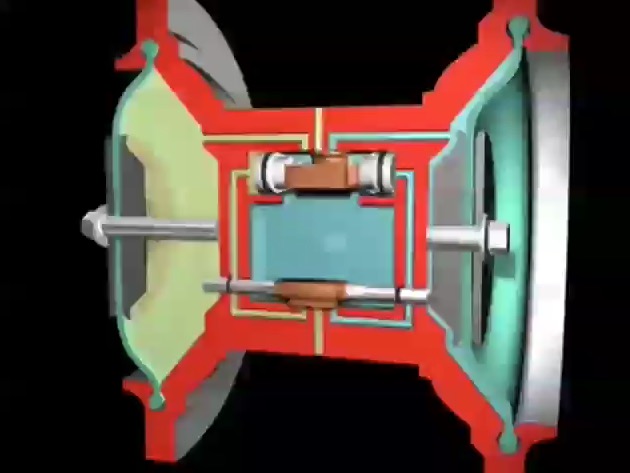
For water-like fluids, air-operated/electric-operated diaphragm pumps are often an excellent choice because they offer:
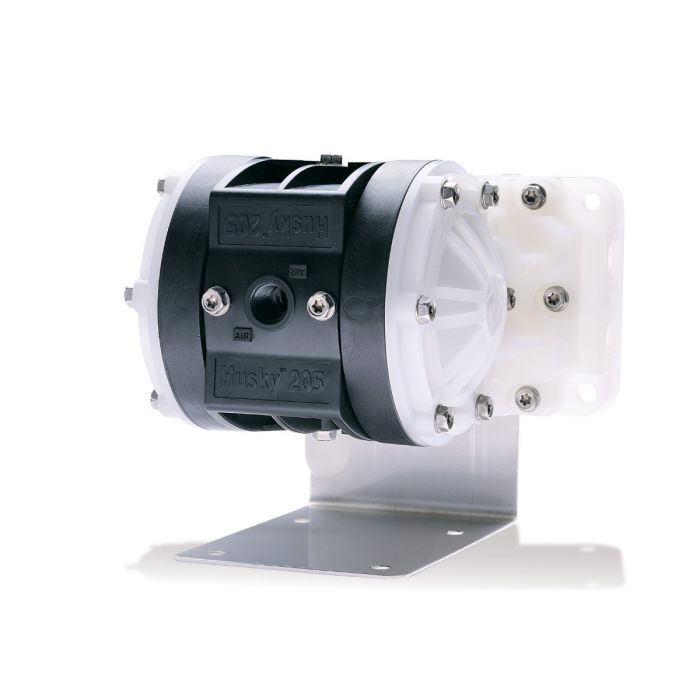
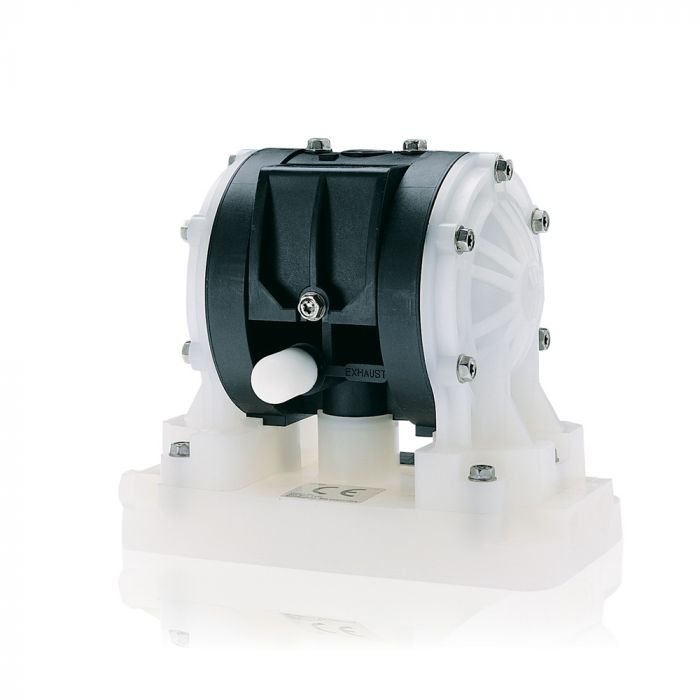
Graco Husky & QUANTM diaphragm pumps are commonly used for transferring water, cleaning solutions and light industrial liquids.
Chemical transfer requires careful pump selection to ensure safety and reliability.
Important considerations include:
Many Graco Husky diaphragm pumps are available in chemical-resistant materials such as polypropylene and stainless steel, making them suitable for a wide range of chemical applications.
Oil transfer applications require pumps designed to handle medium-viscosity fluids efficiently.
Popular options include:
These pumps are widely used in:
They provide reliable transfer of engine oils, hydraulic oils and other lubricants.
Grease is significantly thicker than oil and requires a pump designed specifically for high-viscosity materials.
Grease transfer applications often use:
These pumps generate the pressure required to move thick grease through dispensing systems and pipework.
FES supplies pumping solutions for both oil and grease transfer applications across many industries.
Paints and coatings often require pumps that can handle sensitive materials without damaging product quality.
Graco Husky diaphragm pumps are widely used in coating and finishing applications because they can handle a variety of paints, inks and coatings effectively.
Some industrial materials are extremely thick and difficult to transfer.
Examples include:
For these applications, businesses often choose:
FES supplies pumps capable of handling materials ranging from water-like liquids through to highly viscous products.
One of the biggest advantages of air-operated or electric-operated diaphragm pumps is their versatility.
This flexibility makes air/electric operated diaphragm pumps one of the most popular choices across industrial sectors.
Different industries often have unique fluid handling requirements.
Used for transferring ingredients, flavourings and liquid products.
Requires pumps capable of handling aggressive chemicals safely.
Uses pumps for oils, lubricants and grease transfer.
Often requires pumps for coatings, adhesives and production fluids.
Uses pumps for water transfer, dosing and waste handling.
Choosing the right pump helps improve efficiency and reduce operational costs across all industries.
Selecting the wrong pump can lead to several problems:
Taking time to understand the fluid and application requirements can prevent expensive mistakes before they happen.
With decades of experience in pumping equipment, Fluid Equipment Services helps customers identify the most suitable pump for their application.
Whether you need to transfer:
FES can recommend the right Graco pump, accessories and system components to ensure reliable and efficient performance.
Choosing the right pump starts with understanding the fluid you need to move. Factors such as viscosity, chemical compatibility, flow rate and pressure requirements all play an important role in selecting the best solution.
From water and chemicals to oils, grease and highly viscous materials, there is no one-size-fits-all answer. Working with experienced pump specialists like FES can help ensure you select equipment that delivers reliable performance, lower maintenance costs and a longer service life. Contact us today for any pump related queries and we’ll be happy to help.